
ID checks, withdrawal delays and complaints in online gambling
 Available in GB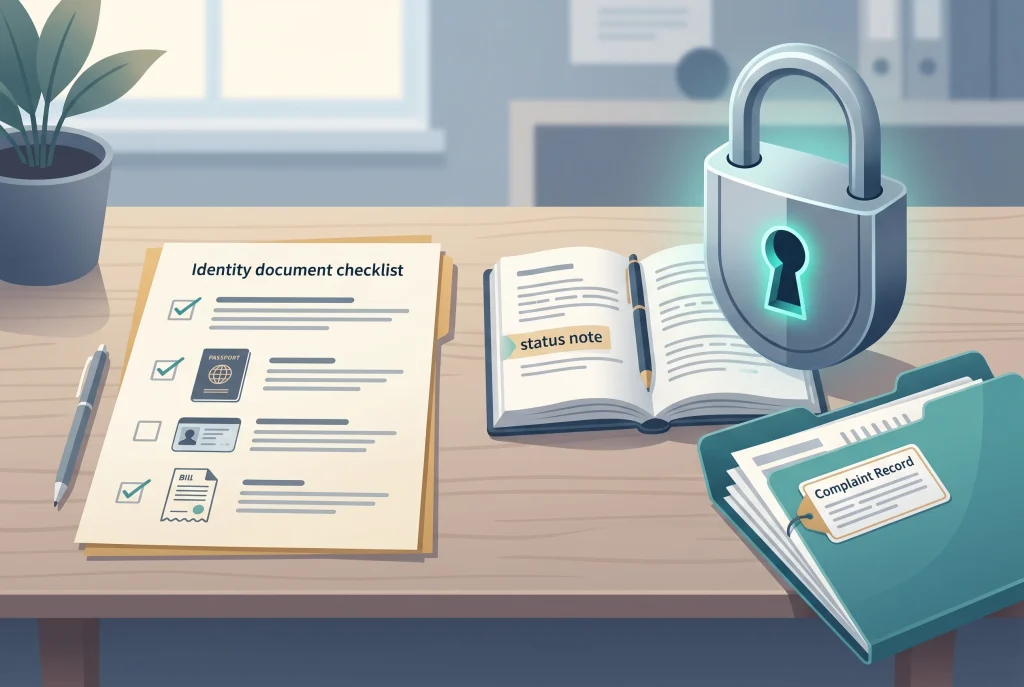
An identity request can feel worrying when money is already in an account or a withdrawal is waiting. It can also be easy to read every delay as unfair. The safer way to look at it is to separate three things: ordinary account checks, unclear communication, and a possible dispute that needs a proper complaint route.
For gambling businesses serving Great Britain under Gambling Commission regulation, age and identity checks are not optional extras. They are part of the account process and help confirm age, identity and self-exclusion status. The important question for a customer is not how to avoid the check, but what is being asked for, why it is being asked, how the business explains the delay, and what record you keep if the matter needs to be escalated.
The wider picture is in our guide to what UK players should check.
Why age and identity checks happen
Official guidance for the Great Britain regulated market explains that online gambling businesses must ask customers to prove age and identity before they can gamble. That check is not only about age. It also helps a business confirm the account holder’s identity and check whether a self-exclusion record applies. This is one reason why a site advertising easy play with no meaningful identity checks should not be treated as safer or more convenient.
Identity checks can be frustrating because they often appear just when the customer wants a quick answer. The business may ask for documents, account information or evidence connected with the source of funds. The exact request can vary, and fixed timescales should not be assumed. A simple check may finish quickly; a more complicated account issue may take longer. What matters is whether the business gives clear instructions, asks for relevant information, and explains what is holding the payment back.
Do not respond to a document request by using false details, another person’s card, altered documents or an account in someone else’s name. That can create a more serious problem and may make a withdrawal harder to resolve. If the request looks suspicious, protect your documents first and use the dedicated data safety guide before uploading anything.
What to read before sending documents
Start with the account terms. Gambling businesses must give account information and make relevant account terms available. That does not mean every term is fair or every decision is right, but it gives you a place to check what the business says about identity, payment methods, withdrawals, bonus restrictions and complaints.
Read the request itself carefully. Does it name the document needed? Does it explain whether the issue is age, identity, payment ownership, source of funds, a bonus condition or an account-security check? Does it tell you where to upload the document through the account, rather than through an unsafe email or message? Does it explain what will happen next?
If the request is vague, ask for clarification before sending extra personal information. A good question is precise: “Which document is required, which account rule is being checked, and will the withdrawal continue once that check is complete?” Keep the reply. If the business later gives a different reason, your record will matter.
A delayed withdrawal: what to ask and what to keep
Gambling Commission material on withdrawals says customers should be told the reason when a withdrawal is delayed because an account issue or terms issue is being investigated. If a withdrawal is not processed, the customer should receive an explanation. That is a practical standard to use in your own communication.
- Ask for the stated reason for the delay in writing. Avoid long emotional messages; a clear question is harder to ignore.
- Check whether the reason is linked to identity, payment method, source of funds, bonus terms, security or account terms.
- Save the terms that applied when you deposited, accepted any offer, and requested the withdrawal.
- Keep dates, times, reference numbers, chat transcripts, emails and document-upload confirmations.
- Use the business’s complaint process if the answer is unclear or the delay continues without a proper explanation.
- Consider an alternative dispute resolution route only after the business process has been followed and the matter is still unresolved.
This record does not guarantee that the withdrawal will be paid. It does make the issue easier to explain and harder to confuse. It also helps you stay within the facts instead of relying on rumours, screenshots from unrelated cases or promises from third parties who claim they can recover funds for a fee.
Common situations and focused questions
| Situation | What may be happening | Question to ask | Record to keep |
|---|---|---|---|
| Age or identity document requested | The business may be confirming that the account belongs to the named person and that the customer meets age requirements. | Which document is required, and how should it be supplied safely through the account? | The request, upload confirmation and any reply explaining the result. |
| Payment method questioned | The business may be checking that the payment method belongs to the account holder and follows the terms. | Which payment rule is being checked, and does the business need proof of ownership? | Payment records, terms for payment methods and messages from support. |
| Source of funds requested | The business may be carrying out compliance checks connected with affordability, money-laundering controls or account risk. | What kind of evidence is needed, and what personal details are not required? | The exact document list and any deadline or explanation provided. |
| Bonus issue raised at withdrawal | The business may say that a promotion condition affects the withdrawal. | Which promotion term is being relied on, and where was it shown before acceptance? | The offer terms, acceptance time and account balance history. |
| Account closed or restricted | The business may be investigating a security, terms or safer-gambling issue. | What is the reason for the restriction, and how can a complaint be submitted? | Closure notice, account history, messages and complaint reference. |
Complaint route before escalation
A complaint should go to the gambling business first. Use the complaint route described in the account terms or on the site. Keep the complaint short and factual. State what happened, the date of the withdrawal request, the reason given so far, what documents you supplied, and what outcome you are asking for. Do not add threats, accusations you cannot support, or unrelated complaints about losing money through play.
If the business process does not resolve the matter, official guidance says a customer may be able to take an unresolved complaint to an alternative dispute resolution provider. That route is not the same as a regulator deciding your individual case, and it is not a guaranteed recovery service. It is a structured way to present a dispute when the business’s own complaint handling has not settled it.
Before escalating, check whether the gambling business is licensed for Great Britain and whether the complaint route is clearly named. If the site does not appear on the public register, or the domain and trading name do not match the licence claim, the licence-checking guide is the better next step.
When the safest step is support rather than another message
Sometimes the account problem is not only administrative. If the delay is happening while you are chasing losses, trying to gamble despite a self-exclusion, hiding transactions, or feeling unable to stop until the money returns, treat that as a safety signal. Sending more messages to a gambling business may feel urgent, but support can reduce the pressure while the complaint process continues.
You do not need to wait for a crisis to use support. Blocking tools, bank gambling blocks, self-exclusion and help services can be used alongside a complaint. They do not decide the withdrawal issue, but they can stop one delayed payment from becoming a reason to deposit again somewhere else.
Delays often start at the payment layer: payments, bank blocks and funds.
Read next
- Payment and customer-funds checks
- Protect identity documents before uploading
- Bonus terms that may affect withdrawals
- Support and blocking options
- Back to the main guide