
Best 3-Reel Slots UK: Reels, Rules and Odds
 Available in GB
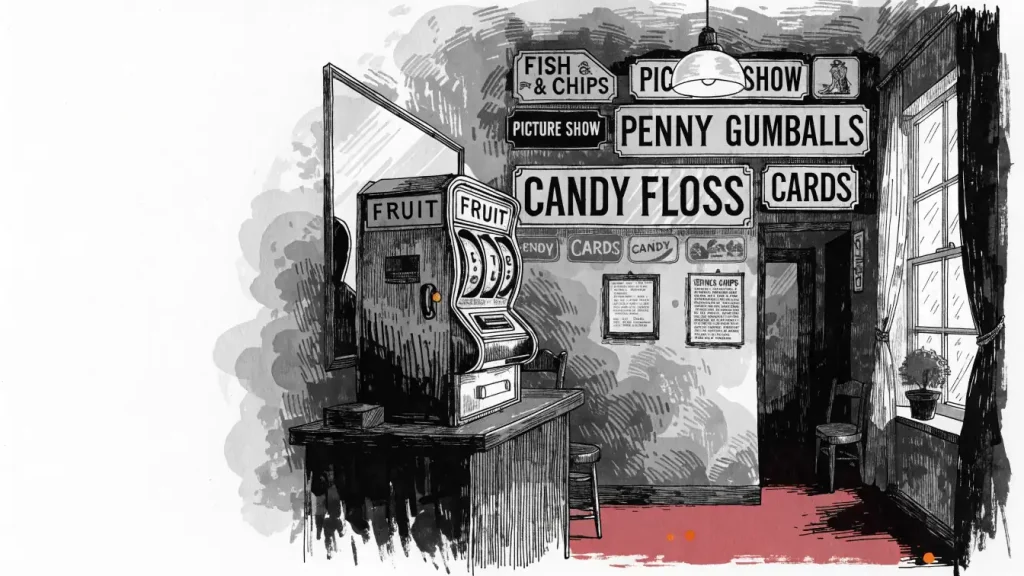
See how reel layouts, winning lines and odds shape three-reel slots, and what to check when playing for free or real money.
What Makes a Three-Reel Slot Different?
A three-reel slot has three vertical reels, each displaying symbols as it spins and stops. The layout is compact: you see a row of symbols across the centre of the screen, with the reels arranged side by side. A result depends on how the symbols land in relation to the game’s winning line or lines. The name describes the reel count, not a guarantee about how simple the rules are.
That distinction matters when you compare three-reel games with 5 reel slot games. A five-reel game has two more reels, so its layout can offer more ways for symbols to form combinations. A bet can be applied across all five reels, rather than being confined to a smaller central arrangement. The screen may also show several rows on each reel, creating a larger grid. More visible positions can mean more patterns to follow, but the basic idea remains: the game checks the stopped symbols against its rules.
With three reels, the arrangement is easier to scan at a glance. You can follow each reel as it turns, then check the symbols along the line that matters. In a five-reel game, combinations may run across a wider layout, and a win can depend on how symbols connect over several reels. The extra space can support more elaborate ways of arranging symbols. It does not, by itself, tell you whether the game is easier to understand or more rewarding.
The most useful starting point is to look at the paytable and the rules for a particular game. Those explain which symbols count, which positions matter, and what combinations the game recognises. Two games with the same number of reels can still work differently. One may centre on a single line, while another may offer several lines or other ways to form a result. Reel count tells you the shape of the game; the paytable tells you how that game reads the shape.
Best High-Volatility Slots UK: How They Work
A three-reel layout often leaves less room for extra features than a wider grid, though the format alone does not rule them out. A game might add symbols with special functions or other features around its basic reel arrangement. What matters is the individual rules, not a label such as “three-reel”. I find it helps to separate the visible layout from the mechanics behind it: the reels show where symbols land, while the game’s rules decide what those positions mean.
That also explains why “three reels” should not be treated as a synonym for “one winning line”. The number of reels and the number of paylines are separate parts of a slot’s design. A line may cross the middle row, or the rules may recognise other paths across the displayed symbols. Check which lines are active and how a winning combination must appear before reading much into the picture on the screen.
The short format can feel more direct because there are fewer reels to track. You can see the whole result without scanning a broad field of symbols, and the relationship between the reels is plain. But a small screen layout is not a measure of a game’s odds, its potential returns, or the size of its risks. Those depend on the game’s own mathematics and rules, not simply on whether it has three reels or five.
If you are comparing games, begin with the structure: count the reels, note how many rows are visible, and find the winning-line rules. Then check the paytable rather than assuming that a familiar-looking arrangement works like another one. That is enough to understand the basic difference without confusing appearance with mechanics.
Three reels, fewer places to look.
Classic Reels, Fruit Machines and Modern Video Slots
“Classic” can mean a few things when someone talks about three-reel slots. Usually, they mean a compact game built around a small set of familiar symbols: fruit, bells, bars, sevens or a lucky number. The reels are the main event, and the screen tends to keep the rules in view rather than surround them with a separate world of characters and animations.
Classic Slots
Compact games built around familiar symbols like fruit, bells, or sevens.
Video Slots
Broader presentations with elaborate artwork, themed characters, and animations.
Fruit Machines
Digital versions of traditional arcade machines with a restrained background.
A fruit-machine-style game takes that look as its starting point. You might see cherries or lemons beside traditional symbols such as bells and lucky sevens. The layout often feels like a digital version of a familiar arcade machine: reels in the centre, a restrained background and buttons or labels that make the available actions easy to spot. That visual shorthand is why players may call a game a fruit machine even when they are using it on a screen rather than standing in front of a physical cabinet.
The label does not, by itself, tell you how a game works. A slot can look old-fashioned while adding features that would not have been part of the simple image its artwork suggests. Another game may use bright modern graphics but keep its play close to the basic reel format. I find it more useful to separate the appearance from the mechanics: check the rules and features, then decide whether the presentation suits you.
What makes a game feel classic?
The classic style is usually spare. Symbols are large and recognisable, the reel window takes up most of the screen, and the game does not need a long story to explain what you are looking at. A three-reel layout reinforces that impression: fewer visual elements compete for attention, so you can follow the reels without scanning a crowded screen.
That does not mean every traditional-looking game is identical. Symbol sets, sound, animation and the way rules are displayed can vary. Some games aim for the look of a pub fruit machine; others borrow only a few familiar symbols and give the rest of the design a cleaner digital finish. “Classic” is a style description, not a promise that a game contains no extra features.
Best RTP Casino Slots UK: How Returns Work
When I browse this category, I treat the title and artwork as a first clue, not a rulebook. The information panel is where a game explains its actual features. It may describe special symbols, feature rounds or other conditions that change how a spin can play out. If you want a straightforward reel experience, that panel is worth a glance before you settle in. Familiar pictures can hide unfamiliar rules.
Classic slots vs video slots
The useful contrast is not simply “old” against “new”. Classic slots tend to put the reels and their symbols front and centre. Video slots often build a broader presentation around them: more elaborate artwork, animated scenes, themed characters, sound design and feature sequences. Their screens may feel more like a small game environment than a digital machine face.
Video slots also commonly use layouts with more reels or more ways for symbols to form combinations. A five-reel game can apply a bet across all five reels, while a three-reel game keeps the visible arrangement compact. That structural difference affects the way the game is presented, but it does not tell you which one is more generous or more enjoyable. The rules and maths belong to the individual title.
The feature set can be a more noticeable dividing line. A classic-style game may keep attention on matching symbols across the reels. A video slot may add expanding or wild symbols, sequences of bonus play, animated transitions or several layers of features. Some three-reel games have extra features too; they are not automatically plain just because they have fewer reels. Likewise, an elaborate video slot can still be easy to understand once you have read its paytable and feature notes.
Video slots often use layouts with more reels or more ways for symbols to form combinations compared to three-reel games.
I would not use “video slot” as shorthand for complicated, either. Some are simple to follow, while a traditional-looking game can have rules that need a careful read. The screen tells you the mood; the game information tells you what can happen. Small distinction, big help.
Choosing by feel, not by label
If you want the uncluttered look of a traditional fruit machine, a classic three-reel title is a natural place to start. Look for clear symbols, a layout you can read at a glance and rules that match the level of complexity you want. If you prefer a themed setting, moving scenes and more varied features, a video slot may hold your attention better.
There is overlap. Three-reel slot games online can borrow modern animation, while a five-reel video game can use fruit symbols and a deliberately retro palette. “Fruit machine”, “classic slot” and “video slot” are useful descriptions, but they are not strict technical categories. Game makers mix visual styles and mechanics freely.
A sensible comparison starts with what is on screen and then moves to the rules: how many reels are shown, what symbols matter, which features are available and how the game explains them. That is more reliable than choosing by a nostalgic name or glossy artwork. The packaging is only the first spin.
Best High RTP Slots UK: How to Compare Games
Best casino sites in the UK
- NightLuckBonus: Welcome Pack + 805% Up To 6400€ + 280 FS · Payout speed: 1-3 business days
- WinBeastBonus: €5000 + 500 FS + €650 Freebet · Payout speed: 1-3 business days
- ChanzeBonus: Slots Welcome Bonus #1 200% up to €500 · Payout speed: 1-3 business days
- ZombillionBonus: Welcome Pack 250% up to £4000 + 200 FS · Payout speed: 1-3 business days
- SlotoSportBonus: 500% up to £ 10 200+ 777 FS · Payout speed: 1-3 business days
- Revery PlayBonus: 100% up to€1,000+ 100 FS · Payout speed: 1-3 business days
- NightWinBonus: £900 + 400 free spins · Payout speed: 1-3 business days
- JetsetspinsBonus: 200% Bonus + 100 Free Spins + Free Royal Wheel · Payout speed: 1-3 business days
Free Play Is Practice, Not a Payout
A free-play version lets you try a slot without risking your own money. The reels may spin, symbols may line up and the game may display a win, but the balance shown is not cash. It is play money, and any winnings stay inside that demo. You cannot withdraw them, transfer them to a gambling account or turn them into a payout.
That distinction is easy to miss when a demo looks much like the real game. The same title, artwork and sounds may appear in both versions. A winning result can look convincing, too. But the important difference is not what the screen shows; it is whether you have placed a real-money stake. In a free game, you have not.
What a free demo can show you
I find a demo useful for getting a feel for the controls. You can see how the reels move, where the spin button is and how the game presents its features. If you are unfamiliar with an old-fashioned 3 reel slot, a free version gives you room to work out what is happening without putting money at risk.
It can also help you decide whether you like the pace and presentation. Some games keep the screen spare, with a few symbols and a straightforward layout; others add animations and extra features. A demo lets you inspect that experience before deciding whether it is one you want to spend time on.
Understanding Demos
A demo is a way to try the game, not a forecast of future results.
What it cannot do is tell you that you will get the same sequence of results later, or that a run of wins means a payout is due. The result you see in practice is simply part of that play session. It gives you no promise about a separate session, whether free or for real money. A demo is a way to try the game, not a forecast.
That is also why “how to win” guides can mislead if they treat practice results as a method. Learning the buttons may help you avoid a clumsy mistake, but it does not make a particular combination arrive. A run of symbols in free play does not reveal a pattern you can carry over to another spin. The interface can be learned; the outcome cannot be read from the last result.
No download does not mean real money
Many games can be opened in a browser without installing software. That is what no-download play means: the game runs online rather than requiring you to fetch and install a separate app. It says nothing by itself about whether the game is free or whether it involves real money.
A free online version may open straight away, or it may be offered through a casino site’s game lobby. The format does not change the basic point: if you are using a demo balance, that balance is fictional and it cannot be cashed out. “No deposit” can be used to describe access that does not require you to put money in first, but it does not turn practice credits into a payout.
Best Bonus Buy Slots UK: How Bonus Buys Work
Before you start, check what the screen says about the mode. Look for clear wording such as “demo” or “play for fun”, and notice whether the displayed balance is identified as virtual. If the site offers both a demo and a real-money version, do not assume that a familiar game title means you are still in the free mode. Check the selected option and the balance shown before pressing spin.
This is a small check with a useful purpose: it keeps the game you meant to try separate from a game that involves a stake. If the mode is unclear, stop and look for its explanation rather than guessing from the appearance of the reels.
What practice is good for — and what it is not
Use free play to see whether the controls make sense to you. You can check how a spin starts, how the game displays a result and whether you find the pace comfortable. If you want to compare the feel of a compact three-reel layout with a busier video slot, a demo can make that contrast easy to notice. You are comparing presentation and play experience, not proving that one version will pay better.
You can also take your time with the game’s information panels. If a symbol, button or feature is unfamiliar, pause and read the on-screen explanation. That is better than guessing and then assuming a demo result has taught you a winning tactic. Practice is most useful when it answers practical questions about how a game works.
It is not a reliable way to estimate what you might win with real money. A demo session may show several wins, or very few; neither outcome establishes what will happen in a later session. Nor does the label “high payout” tell you that you are likely to receive a payout. It may be promotional wording, and a free-play win still has no cash value.
Demo winnings are fictional play money and cannot be withdrawn or turned into a payout.
I would treat a demo as a look around, not a rehearsal for a guaranteed result. You can learn the layout. You cannot practise your way into a payout.
Keep the balance in perspective
The balance in a free game is there to let you continue using the demo. It is not money held for you, even if the game counts up after a win or shows a large total. There is no cash prize waiting behind that display. When you leave the demo, the apparent winnings do not follow you.
That can make free versions useful for browsing, especially if you are deciding whether a game’s style suits you. It can also make them a poor guide to how real-money play feels: there is no actual stake at risk, so a win or loss does not have the same financial consequence. Keep those two experiences separate in your mind.
If you are only looking to try a few spins, stay in the clearly marked free mode and treat every displayed result as part of the game’s demonstration. If you later decide to move beyond practice, that is a different choice with different checks; a demo itself does not create a gambling account or authorise a real-money wager.
The simple rule is worth keeping: free play is for trying, not earning. No payout. No workaround.
UK Slot Sites: Licensing, Payments and Play Rules
Playing Three-Reel Slots for Real Money
A free demo and a gambling account can show you the same three-reel game, but they are not interchangeable. In a demo, the credits are fictional: you cannot withdraw them, and a win does not become a cash payout. With real money, you deposit funds into an account with an operator, place stakes and can withdraw eligible winnings under that operator’s terms. That changes the decision from “Do I like this game?” to “Am I comfortable risking money here?”
If you have only tried free play, pause before moving to a paid version. The reels and controls may look familiar, but the consequences of a spin are different. A no-registration demo, where offered, is still just a demonstration. It does not establish that you have opened a gambling account, passed age checks or agreed to the conditions for real-money play.
Before opening an account
In Great Britain, commercial online gambling is regulated by the UK Gambling Commission. Remote operators offering gambling to consumers in Great Britain must hold the relevant Commission licence, even if their key equipment is located elsewhere. The Commission issues operating licences to businesses and personal licences to individuals working in regulated roles; for you, the practical check is the operator’s current status, not a claim in a banner or a logo on a page.
Before depositing, find the operator’s legal identity and check its licence number on the UK Gambling Commission’s public register. Make sure the register entry matches the business you are actually using. A familiar brand name alone is not enough if the account, website or payment route points to a different company. I treat that check as part of setting up the account, not paperwork to leave until there is a problem.
Account Setup
- Find the operator’s legal identity
- Check the licence number on the UK Gambling Commission register
- Complete the requested identity checks
- Set a financial limit before the first deposit
You must be at least eighteen to gamble online in the UK, and the operator must verify your age before allowing you to deposit. Be ready to complete the requested identity checks through the operator’s stated process. If your details do not match or verification is pending, do not try to work around it with another person’s account or payment method. An account is meant to be yours, and a mismatch can complicate both access and withdrawals.
Set the boundaries before the first deposit
A UK-licensed remote operator must prompt a new customer to set a financial limit before the first deposit and make account-level limit controls accessible. Use that moment deliberately. Pick a boundary that fits money you can afford to lose, then check where you can review or change it in the account. A limit is more useful when you know how it works before you are caught up in a session.
Do not treat the prompt as a box to clear. Decide what amount you are willing to spend and what point means you stop, then avoid raising a limit just to keep playing. If you are unsure, leave the account unfunded. The ability to deposit is not a reason to do so.
There are also rules about how online slots operate in Britain. Autoplay is banned, and a slot game cycle must take at least two and a half seconds before another can begin. For real-money play, the maximum stake in a single online slot game cycle is two pounds if you are under twenty-five, and five pounds if you are twenty-five or older. These are ceilings, not suggested stakes; choosing less, or not playing, remains your decision.
Payment choice deserves a check of its own. UK-licensed casinos cannot accept credit cards for gambling, including credit-card funding routed through a money service business. A wallet cannot be used for gambling if it lets credit-card funds pay for it. If a payment method’s funding route is unclear, check with the operator before trying it rather than assuming that a successful card or wallet transaction is permitted.
Check the account, not just the game
Before you press deposit, read the operator’s terms for account funding, withdrawals and identity checks. Look for the legal business name, the rules for requesting a withdrawal and any circumstances in which more documents may be needed. If the information is difficult to find or seems inconsistent with the register entry, stop and resolve that first. A polished game screen does not answer account questions.
UK-licensed casinos must provide responsible-gambling tools, including self-exclusion. Find these controls before you need them: knowing where they are is easier than searching while upset or chasing a loss. Licensed operators must also offer an internal complaints process and access to an approved Alternative Dispute Resolution service. If something goes wrong, keep the relevant account messages and transaction records, use the operator’s complaints route first, and check its stated ADR option if the complaint is not resolved.
Do
- Check the operator’s licence on the public register
- Set a financial limit that fits your budget
- Use responsible-gambling tools like self-exclusion
Don’t
- Assume a demo result predicts a real-money win
- Use credit cards for gambling
- Raise your limits just to keep playing
None of these checks makes a slot safe from loss. They tell you whether you understand the route you are taking and what protections and controls are available. I would not deposit just because a game has familiar fruit symbols or because a demo session went well. The demo tells you how the buttons work; it does not tell you what a real-money session will cost.
Keep the first decision plain: confirm the operator, complete verification, set your limit, use an allowed payment method and make sure you can find the account controls. If any part is unclear, wait. There is no need to turn uncertainty into a deposit.
Paylines, Odds and What the Reels Don’t Tell You
A payline is a route across the reels on which matching symbols can form a win. On a simple 3 reel fruit machine, that route may be a straight line across the centre. Other games can offer several lines in different patterns, so check the paytable rather than assuming that matching symbols anywhere on screen count.
The number of lines tells you how many patterns may qualify, not how generous the game is. Look at which symbols pay, whether a line must be played to count, and how the stake is applied. A game can show a win on one line while other lines lose; the amount returned depends on the combination and your total stake. Those details sit in the paytable, not in the reel count.
That distinction matters when comparing 3 reel slot machine paylines. More lines may create more chances for a line to connect, but they can also mean your stake is spread across more patterns. Neither the number of lines nor a busy-looking result tells you the likely return. I check the rules before reading much into a string of wins.
Frequency is not the same as return
Slot volatility describes the shape of results, not whether a game is favourable. Lower-volatility games tend to return smaller wins more often; higher-volatility ones tend to have longer gaps between wins, with larger payouts when they land. Some lower-volatility titles produce a winning combination every few spins on average, but that pattern is not a promise for your session. A run without a win can still happen.
The same distinction applies to 3 reel slot machine odds. A frequent small win can feel reassuring, especially when the balance moves only gradually, but frequency does not establish the amount returned over time. Every slot with a house edge gives the player a negative mathematical expectation over enough play. The pace of losses can vary; the underlying arithmetic does not become favourable because wins arrive regularly.
Compare the game, not just the reels
Reel count alone cannot tell you a game’s volatility, paytable, or expected return. For context, lower-volatility slots are often built with five reels and many paylines, with fixed jackpot prizes rather than growing progressive pools. Their bonus rounds may multiply wins already collected. That is a different structure from a basic three-reel layout, but it still does not make a five-reel game more or less favourable by itself.
Does a high payout label guarantee wins?
No, it may be promotional wording, and a free-play win still has no cash value.
What is the difference between volatility and return?
Volatility describes how wins are distributed, while return figures describe a long-run model.
When you look at 3 reel slot machines online, read the paytable and game rules for the specific title. Find the winning combinations, the lines that count, and how the stake relates to them. If the game states its volatility or return information, treat those as separate details: volatility describes how wins are distributed, while return figures describe a long-run model, not a prediction for your next spin.
Free 3 reel slot machines can help you learn where the paylines run and how symbols combine, but a demo result cannot establish real-money odds. In either mode, the screen shows outcomes, not a reliable forecast. I keep those ideas separate. That is the useful distinction.
Three-Reel Slots in the Wider Casino
A three-reel slot is one part of an online casino, not a rulebook for every game there. You can move from reels to a live dealer table or a digital version of a table game, but each has its own pace and decisions. With a slot, the game cycle runs automatically after you set a stake and start it. At roulette, you choose where to place your bet before the ball is released. Different rhythm, different mechanics.
Roulette makes a useful comparison because its outcomes are organised around a wheel, not reels. A European-style wheel has 37 pockets: a green zero and numbers from 1 to 36. You can back a single number or choose a broader group of outcomes; the payout depends on the bet. Blackjack is different again, built around decisions made against the dealer rather than a spinning wheel or reels. I’d keep those distinctions in mind when comparing games: familiar casino menus do not mean familiar rules.
There is also a practical distinction around stake limits. A specialist review reports that Great Britain’s online slot stake limits do not apply to roulette or blackjack. That does not make those games a way to sidestep slot rules; they are separate products with separate mechanics and risks. The limit question belongs to the specific game, not the casino lobby as a whole.
Live casino adds a human dealer and a streamed table, while other table games may be software-led. Neither format turns a slot into a table game, or vice versa. I find it helps to choose by the kind of decision-making you want: set a slot running, follow a wheel, or play a hand. Small distinction. Important one.
Bonuses and the Small Print Before You Play
A bonus can look like a simple extra, but the terms decide when it becomes available and what you must do to use it. Before opting in, check whether the offer is for a deposit, a particular game or a qualifying action. Then read the conditions on eligible games, any expiry, and what happens to unused bonus funds. An offer may not apply to every slot, so don’t assume a classic three-reel slot qualifies just because it appears in the casino’s games list.
Timing deserves a close look. A specialist review describes bonuses as having a 48-hour lifespan, but that should not be treated as a rule for every operator or offer. Check the promotion’s own terms for the start point and end time; an offer may begin when it is claimed rather than when you first see it. If the timing is unclear, ask the operator before opting in.
I also check whether accepting a promotion changes the withdrawal conditions for my own deposited funds, and whether opting in is automatic. Those details can matter more than the headline. A bonus is an offer with conditions, not extra value without strings.
Most importantly, a promotion does not change the slot’s underlying maths. It cannot make a game more likely to return money over time, and it is no reason to raise a stake or keep playing after you planned to stop. If the terms are hard to find or don’t make sense, leave the offer alone. No bonus is a requirement.